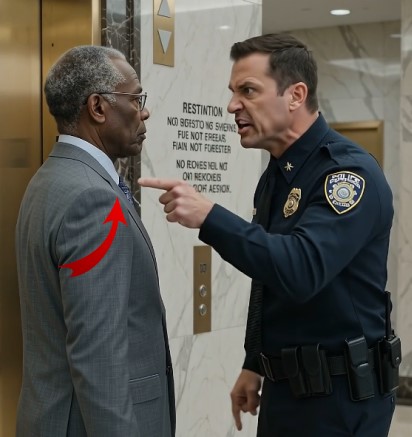
A routine morning inside a busy corporate building quickly turned into an uncomfortable misunderstanding when a security guard made assumptions about a man trying to access a restricted elevator. What began as a simple request to reach an office soon became an important reminder about professionalism, patience, and the risks of judging someone before knowing the facts.
The man, dressed in a simple grey suit, walked calmly toward an elevator serving one of the building’s restricted executive levels. Before he could continue, a security guard stepped forward and stopped him.
“Where do you think you’re going?” the guard asked.
The man remained composed and explained that he wanted to use the elevator because he was heading to his office. Instead of asking for identification or checking the building’s records, however, the guard immediately questioned his explanation.
“This level is restricted, and you clearly don’t belong here,” the guard replied.
The comment surprised the man. He pointed out that the guard was relying on assumptions rather than verified information. He even suggested a simple solution: run his full profile through the company’s system.
That should have been the moment when the misunderstanding ended. A professional verification could have quickly established whether the man had authorization to access the floor. Instead, the conversation became increasingly tense.
The guard insisted that he did not believe the visitor had an office in the building and warned him that backup would be called if he refused to leave. The man in the grey suit remained confident and warned that making a decision without checking the facts could have consequences.
Determined to settle the situation, the security guard contacted management and requested that someone come to the elevator immediately.
That decision produced an unexpected revelation.
The man looked at the guard and calmly explained that there was no need to wait for the manager to arrive. The person the guard had just attempted to contact was already standing directly in front of him.
The man in the grey suit was the manager.
Suddenly, the entire interaction looked very different. The guard realized that he had challenged a senior member of the organization without first performing the most basic verification available to him.
“Sir, I apologize,” the guard responded.
But the manager wasn’t focused only on his own experience. For him, the bigger concern was what the incident suggested about how other employees, visitors, or clients might be treated when their position or identity wasn’t immediately obvious.
He requested that the relevant staff members gather so the situation could be addressed. After reviewing what had happened, he informed the guard that his employment was being terminated.
The consequence was serious, but the larger message of the story goes beyond one workplace disagreement. Security procedures exist for a reason, and employees should follow them consistently. However, there is an important difference between professionally verifying someone’s credentials and deciding that a person does not belong based purely on an assumption.
A respectful question, an identification check, or a quick search of company records could have prevented the entire confrontation.
The man in the grey suit did not need special treatment because of his position. He simply expected the same professional process that should be offered to everyone entering the building.
Titles, clothing, and appearances do not always reveal who someone is. In any workplace, respect and professionalism should come before assumptions. Sometimes, taking just a few seconds to verify the facts can make all the difference.