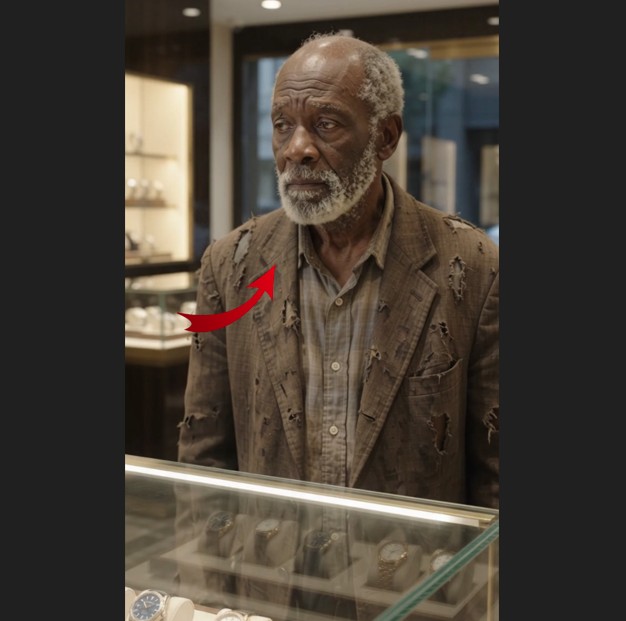
A quiet visit to a luxury watch boutique took an uncomfortable turn when a salesman made assumptions about an elderly customer before asking what he was looking for. The plainly dressed visitor had come to see a rare timepiece, but the employee’s first response was to question whether the man belonged in the store at all.
The customer stayed composed and asked to see the watch. Rather than offer assistance or learn more, the salesman told him to leave, suggesting that his appearance made him an unlikely buyer. The exchange became tense as the employee dismissed the visitor’s interest and described the time spent speaking with him as a waste.
The older man did not argue about his clothes or make a scene. Instead, he asked whether the salesman had always treated people so dismissively. His calm question shifted attention from the watch to the way customers were being welcomed. He also warned that a person might later regret treating others without basic consideration.
A second employee soon arrived and greeted the visitor warmly as Mr. Johnson. The salesman looked surprised as his colleague explained that Johnson was the boutique’s most important private collector. He had come to purchase the store’s rarest watch, the very piece he had asked to view.
That new information changed the atmosphere in the boutique. The salesman, who moments earlier had been eager to send the visitor away, now realized he had misjudged a valued customer. The second employee responded firmly, making clear that the behavior was unacceptable and that the salesman’s position at the store was over.
Mr. Johnson’s point, however, did not depend on his status as a collector or on his ability to buy an expensive watch. He had deserved a courteous greeting from the moment he walked in. Staff members can answer questions, explain store policies, and protect valuable items while still treating every visitor with patience and dignity.
Luxury retail often involves high-value merchandise and attentive service, but a polished setting does not guarantee a welcoming experience. A simple question about what a guest would like to see can prevent an awkward encounter. Listening first also helps employees understand whether someone is browsing, shopping, or visiting for another reason.
The story also points to a useful standard for customer service: treat each visitor according to clear, consistent expectations. If a store requires appointments or limits access to certain displays, staff can explain that politely. If a guest asks about a particular item, the next step is to answer or find a colleague who can. These small choices protect the store’s reputation while helping customers feel welcome, whatever they happen to be wearing, without making assumptions.
The scene offers a clear reminder: clothing does not tell a complete story about a person, and a customer should not have to prove their importance before receiving courtesy. Mr. Johnson’s final observation was brief but memorable: respect costs nothing. In any business, a respectful first interaction can matter as much as the product on display.