My father looked away first.
“That’s a private family letter,” he said.
Judge Simmons adjusted his glasses. “You included it in your filing, Mr. Carter. You described it as evidence that your father intended the farmhouse to remain under your control.”
“He wanted us to look after it.”
“Then we should read the entire letter.”
My mother’s hand slipped from her pearls.
The judge began.
“‘I have helped Robert and Margaret purchase their home. The farmhouse is my gift to Evelyn. She has paid its taxes, arranged its repairs, and asked me for nothing in return.’”
Dad shifted in his chair.
“‘Her service may take her away, but being away is not the same as walking away. This house is hers.’”
For a moment, I could hear Grandpa saying those words from his old kitchen chair.
Judge Simmons placed the letter beside another document.
“The letter explains his wishes. The recorded deed establishes ownership. Commander Carter, the property was transferred to you before your grandfather’s death?”
“Yes, Your Honor.”
“And you have records of the expenses you paid?”
I lifted the blue binder from my bag.
“Twelve years of them.”
My father stared at it.
He had expected me to arrive angry. Perhaps frightened. He had never imagined I would arrive prepared.
With the clerk’s assistance, I provided copies of the tax statements, bank transfers, insurance payments, and repair invoices.
The judge examined them quietly.
Then he turned to my father.
“You claim you paid the property taxes in full during these years. These records identify your daughter as the payer.”
“We handled things while she was overseas.”
“What payments did you personally make?”
Dad opened his folder and slid forward several invoices.
I recognized the first one immediately.
“The roofing company,” I said. “September, three years ago.”
My father gave a tight smile. “Exactly.”
I opened my binder to a marked page.
“The invoice was mailed to my parents because they agreed to meet the contractor. The payment came from my account.”
The amount matched.
So did the invoice number.
Judge Simmons checked the next bill.
And the next.
Each time, I turned another page.
Finally, my mother whispered, “Robert, stop.”
Dad shot her a warning look.
She stared down at her hands.
“We didn’t pay those bills.”
The courtroom became so quiet that I heard someone shift on a wooden bench behind me.
My father leaned toward her. “Margaret.”
“No.” Her voice trembled, but she continued. “You said she wouldn’t come. You said she would sign whatever ended the argument.”
There it was.
After twelve years, they still believed I was the girl who would surrender anything to make them stop being disappointed.
“Why?” I asked.
My mother’s eyes filled.
My father answered instead.
“That property is worth more than you realize. We had someone interested in buying it.”
I looked at him.
“You were trying to sell my house?”
“We have debts, Evelyn.”
“Then you could have called me.”
He spread his hands impatiently. “You hardly speak to us.”
I felt the old instinct rise—the urge to explain myself until he finally understood.
This time, I let it pass.
“You had my number when you needed a defendant.”
He lowered his hands.
Judge Simmons brought the hearing back to the documents. He asked several more questions, giving my parents opportunities to produce evidence supporting their claims.
They had none.
At last, he closed the folder.
“The plaintiffs have not established ownership of this property or substantiated their claim for reimbursement. The claim is dismissed.”
I pressed my palm against the table.
For twelve years, I had imagined what it might feel like to hear someone tell my parents they were wrong.
It felt less like triumph than finally putting down something heavy.
As the clerk gathered the papers, Judge Simmons glanced at me again.
“Commander Carter, I recognized your name from the newspaper coverage of the convoy evacuation. I believe your photograph accompanied the account.”
My father turned toward me.
I nodded once.
“That was my team, Your Honor.”
“Your service deserves respect,” the judge said. “Today’s ruling, however, rests on the evidence you brought.”
“Understood.”
Outside the courtroom, my mother caught up with me near a window.
“Evelyn.”
I stopped.
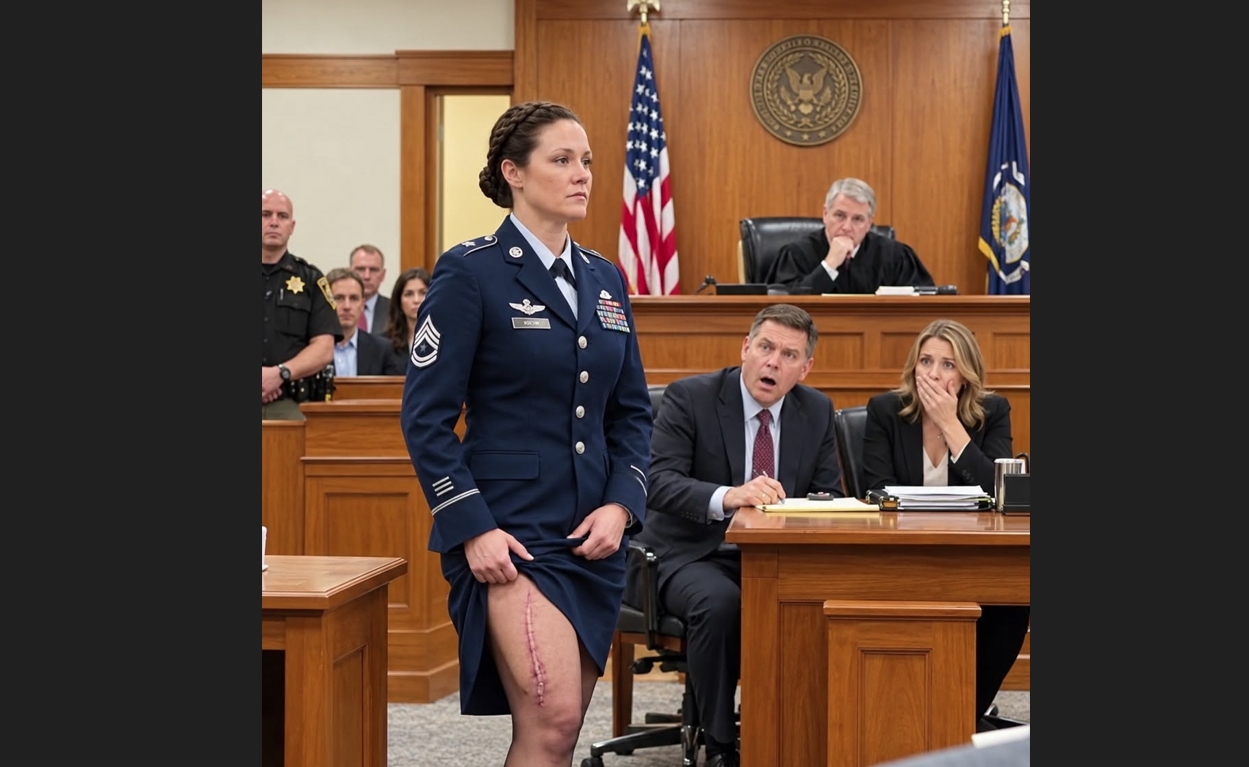
She looked at the ribbons, then at the cane I had taken from beside my chair.
“What happened to your leg?”
I could have told her about the blast. The surgeries. The months spent learning to climb stairs without gripping the railing with both hands.
Instead, I said, “I was injured overseas.”
“Why didn’t you tell us?”
“I called from the hospital.”
Her face changed.
“You said you couldn’t talk because you had guests.”
She covered her mouth.
Behind her, my father stood holding his nearly empty folder.
For once, he had nothing ready to say.
“I’m sorry,” Mom whispered.
I wanted those words to repair more than they could.
“I heard you,” I said. “But I need time.”
Then I walked to my car.
Knox was waiting at home, his tail thumping against the hallway wall. I sat beside him on the floor and finally let myself cry.
The following week, I hired a carpenter to inspect Grandpa’s porch.
The farmhouse needed work. The court records had proved I owned it; they hadn’t repaired the steps or stopped the roof from leaking over the pantry.
For the next six months, I spent my weekends there.
I chose paint. Replaced broken window latches. Argued cheerfully with the carpenter about saving Grandpa’s kitchen cabinets.
The dying oak couldn’t be saved.
I kept a piece of its wood and had it made into a bench for the porch.
My mother wrote twice. Her second letter contained no explanations, no requests, and no mention of money. I answered it.
My father eventually sent a short apology of his own.
I didn’t invite either of them back into my life immediately. We began with occasional phone calls, and I ended them whenever the old accusations returned.
By spring, the house was ready.
On moving day, I placed Grandpa’s letter in a frame beside the kitchen door. Lewis’s flag went on the mantel.
My uniform hung carefully in the upstairs wardrobe.
That evening, I sat on the new porch bench with Knox stretched across my feet. Behind me, light shone through windows I had cleaned myself.
For years, I had pictured coming home as a moment when my parents would finally welcome me.
Instead, I reached into my pocket, felt the farmhouse key, and stayed until the stars came out.