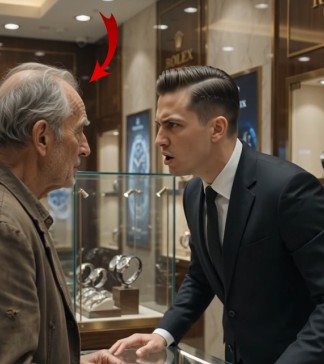
In a world where appearances often influence first impressions, it can be easy to forget that a person’s clothing does not reveal their character, experience, or financial situation. A fictional story about an elderly man visiting a luxury watch store delivers this simple message through an unexpected encounter.
The story begins when an elderly man walks into an elegant watch boutique. Dressed in a worn brown jacket and simple clothes, he approaches the display counter and points to an expensive watch. Calmly, he tells the young salesman that he would like to buy it.
Instead of offering assistance, the salesman looks at the man and begins to laugh. Judging him entirely by his appearance, the salesman assumes that the customer cannot afford anything inside the store.
The situation quickly becomes uncomfortable. The elderly man politely repeats that he has the money and would simply like to see the watch. However, the salesman becomes increasingly rude. He loudly comments on the man’s clothes and insists that he does not belong in a luxury store.
The customer remains calm despite the embarrassment. Then, in a moment that changes the atmosphere, he reaches into his jacket and places a premium credit card on the counter.
He looks at the salesman and delivers a message that the employee will not soon forget: people should never be judged by their appearance.
Moments later, the store manager arrives after hearing the argument. The elderly man calmly announces that he wants to purchase the most expensive watch in the store. The manager immediately recognizes him as an important customer and treats him with respect.
The salesman, who had moments earlier been shouting and trying to force the man out of the store, is suddenly speechless. His confidence disappears as he realizes how badly he misjudged the person standing in front of him.
A Lesson About Respect
The story is not really about an expensive watch or a credit card. Its central message is about respect. People often make quick assumptions based on clothing, age, appearance, or other superficial details. Yet those assumptions can be completely wrong.
Everyone deserves basic courtesy, whether they are entering a luxury boutique, a restaurant, an office, or any other public place. A person’s value cannot be measured by what they wear or how wealthy they appear to be.
For businesses, the story also highlights the importance of professionalism. Every customer deserves to be treated with dignity. Great customer service is not about deciding who seems important; it is about showing respect before making assumptions.
The elderly man leaves the salesman with one final lesson: Respect everyone, because you never truly know who they are or what they have experienced.
Sometimes, the people who speak the least and demand the least attention have the most interesting stories. And sometimes, the biggest mistake a person can make is deciding someone’s worth before learning anything about them.
In the end, the watch was only a small part of the story. The real value was the lesson: appearances can be misleading, but respect should never depend on appearances.