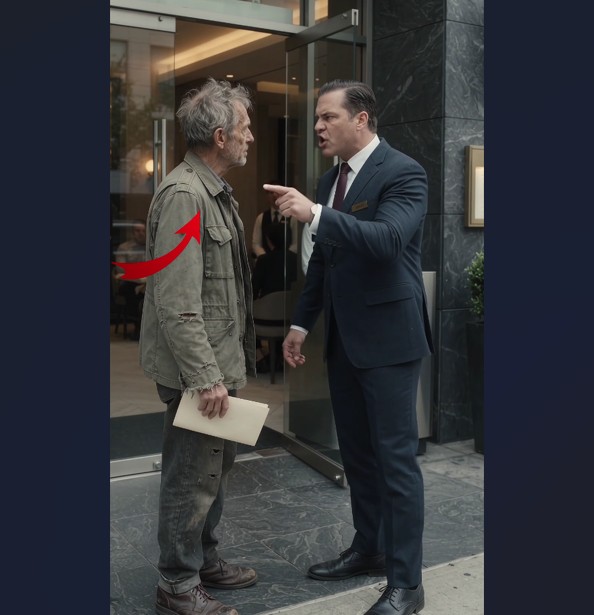
An elderly visitor arrived outside a luxury hotel for a lunch appointment, carrying a document. Before asking his name or checking details, the manager assumed he did not belong and told him to leave. He tried to explain, but the manager continued to dismiss him.
Rather than argue, the visitor presented a purchase agreement. A colleague recognized the paperwork and confirmed that the man had recently bought the hotel. The revelation made the manager reconsider his assumptions, while the colleague instructed him to step aside and suspended him pending review.
Calmly, he pointed out that the document had changed the way the manager viewed him, even though it should not have changed the basic courtesy he deserved. His appointment had been real before anyone learned about the purchase.
This scripted hotel scene highlights how quickly appearances can shape a first impression. In a hospitality setting, staff may need to protect guests and verify access, but they can do so by asking respectful questions and checking information before making judgments. A calm conversation could have established the visitor’s purpose without turning a routine arrival into a tense exchange.
The colleague’s intervention resolved the misunderstanding and welcomed the owner inside. The lasting message is simple: respect should not depend on a person’s title, wealth, or paperwork. Whether someone arrives for a meeting, a meal, or a reservation, listening first is a practical way to provide fair service. The owner’s agreement revealed his identity, but courtesy should have come before that discovery.