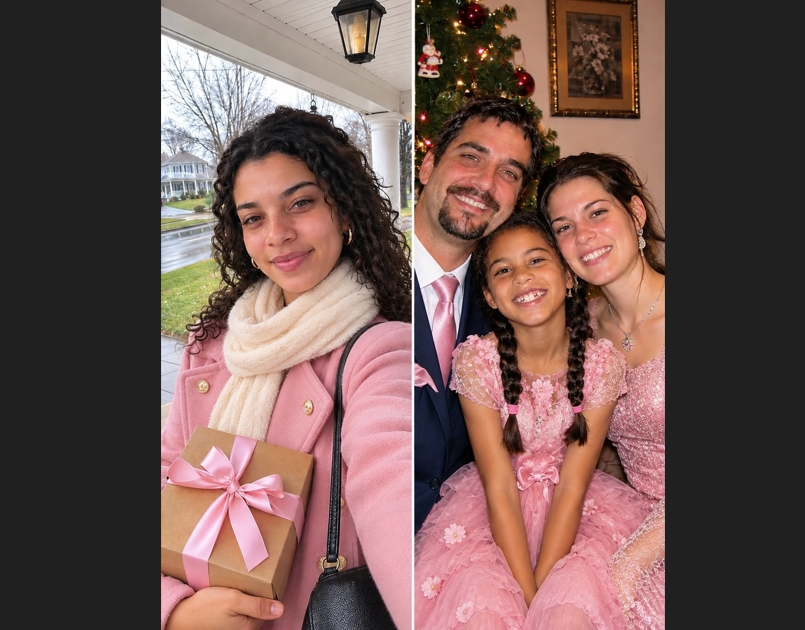
We fostered an eight-year-old girl for eleven months. Eighteen years later, she returned with something she had secretly taken from our home.
Her name was Ivy.
When she first arrived, she wouldn’t unpack her duffel bag. She asked permission to open the refrigerator and apologized whenever she spilled a drop of water.
Every night, she packed her clothes again, ready to leave.
But slowly, things changed.
Crayons appeared around the house. Her shoes stayed in the hallway. She complained about vegetables and argued at bedtime.
One evening, after she stomped upstairs, my husband smiled.
“She finally feels safe enough to be annoyed with us.”
Then social services called. They had found relatives who could take her.
Ivy was leaving the following Friday.
Two nights before the move, I found her beside her packed bags.
“Are you sending me away because I was bad?”
I knelt beside her.
“No, sweetheart. You haven’t done anything wrong.”
“Then why can’t I stay?”
I held her because I couldn’t find an answer that would make it hurt less.
After she left, occasional updates eventually stopped.
But we never stopped wondering about her.
Eighteen years later, our doorbell rang.
A young woman stood on the porch.
“Ivy?”
She burst into tears.
An hour later, we were sitting around the same kitchen table where she’d once done her homework.
But she kept touching the inside pocket of her coat.
Finally, she pulled out a small wooden jewelry box.
I recognized it immediately.
“I took this the night before I left,” she whispered. “I wanted something from home.”
Her hands trembled.
“I’ve felt guilty about it all these years.”
She placed the box between us.
My husband reached for my hand.
Then, very slowly, I lifted the lid.
Inside were folded pieces of paper, bundled together with a faded blue ribbon.
On the top sheet, in a child’s uneven handwriting, were four words:
*To Mom and Dad.*
I touched the paper without lifting it.
“I never called you that when I lived here,” Ivy said. “I wasn’t sure I was allowed.”
My husband pulled out the chair beside him.
“Come sit down, sweetheart.”
She sat, but kept her coat on.
“May I read them?” I asked.
She nodded.
The first letter was written in purple crayon.
*I am nine today. I didn’t break anything at my birthday party. Can I come back for one night? I will be good.*
I had to stop.
Across the table, my husband pressed his fingers against his mouth.
“Ivy,” I whispered. “You didn’t have to be good enough to come back.”
“I know that now. Mostly.”
She looked down at her hands.
“But back then, I kept trying to figure out what I’d done wrong.”
I reached for her.
She let me hold her hand while I opened the next letter.
At twelve, she’d written about a school assignment asking for her happiest memory.
She had chosen a Saturday morning in our kitchen.
My husband had burned her pancake, flipped it over, and tried to hide the black side beneath a mountain of strawberries.
“You told me it was a secret recipe,” she said to him.
“It was.”
“It tasted like the toaster.”
He laughed, and then covered his face.
Ivy moved her chair closer to his.
There were letters about a school play. A difficult first job. The day she’d signed the lease on her own apartment.
Small victories and disappointments we’d never heard about.
She had put them all in that little box.
“Why didn’t you send these?” I asked gently.
“For a long time, I didn’t know if you still lived here. Then, when I was old enough to find out, I got scared.”
“Of what?”
“That you’d answer and barely remember me.”
I shook my head, but she went on.
“You had a whole life before I came. I was only here for eleven months.”
My husband lowered his hands.
“I remember you hated the crust on sandwiches unless they were toasted. You called the vacuum cleaner Gerald. You used to leave your bedroom door open exactly this much.”
He held his fingers a few inches apart.
Ivy stared at him.
“And for years after you left,” he said, “I’d get to the top of those stairs and look toward your room before I remembered.”
She began to cry.
This time, she didn’t hide her face.
I left them together for a moment and went upstairs.
At the back of our wardrobe was a cardboard folder I hadn’t opened in years.
When I brought it down, Ivy wiped her cheeks.
“What is that?”
I laid it beside her wooden box.
Inside were her drawings, a school photograph, and a bundle of birthday cards.
Several were still in their envelopes.
*RETURN TO SENDER.*
“We sent them to the last address we had,” I said. “We contacted the agency too. Eventually, we couldn’t get any more updates.”
She picked up an envelope with her name written across it.
“You sent birthday cards?”
“Every year until they started coming back.”
Her aunt had cared for her, Ivy explained, but became seriously ill. More moves followed. Addresses changed. The few connections between our lives disappeared.
She opened one of the returned cards.
My husband’s handwriting filled the bottom half.
*Your tomatoes are taking over the garden. I told them to wait until you could see them, but they aren’t listening.*
Ivy laughed through her tears.
Then she read the rest silently.
For a while, none of us spoke.
Finally, she asked the question she’d carried much longer than the box.
“Did you want me to stay?”
“Yes,” I said.
My husband leaned forward.
“We asked whether you could. We were told you were going to live with your family.”
“But you were my family too.”
“I know, sweetheart.”
He took her hand.
“I wish we’d had more time to help you understand that leaving wasn’t your fault.”
She sat between us, holding an old birthday card in one hand and my fingers in the other.
Eventually, I stood to make tea.
Ivy started gathering the letters.
“I should let you get on with your evening.”
“We’re having dinner,” my husband said. “Stay.”
She looked at me.
“I haven’t brought anything.”
“You brought yourself.”
She hesitated, then finally unbuttoned her coat.
Over dinner, she told us about her work and the friends who had helped her build a life she liked. We learned how she took her coffee and that she still couldn’t stand peas.
When it grew late, she glanced toward the stairs.
“Would it be strange if I stayed tonight?”
I thought of the little girl who’d written, *Can I come back for one night?*
“No,” I said. “I’d like that very much.”
The next morning, I found her barefoot in the kitchen, watching my husband at the stove.
“Mom,” she said, without looking around, “he’s burning them again.”
He hurriedly turned a pancake over.
Ivy laughed.
Beside her plate sat the wooden box. My husband had placed a spare house key inside it.
She noticed it when she sat down.
For a moment, her smile disappeared.
“Are you sure?”
He pushed the strawberries toward her.
“We’d like you to keep coming back.”
She lifted the key, then looked from him to me.
“Next Sunday?”
“Yes,” I said. “Next Sunday.”
She slipped it onto the ring with the key to her own apartment.
:chatgpt-content-reference{index=”0″}[Ivy_Part_1_and_Part_2.md](sandbox:/workspace/scratch/97884a8aa4b8/Ivy_Part_1_and_Part_2.md)