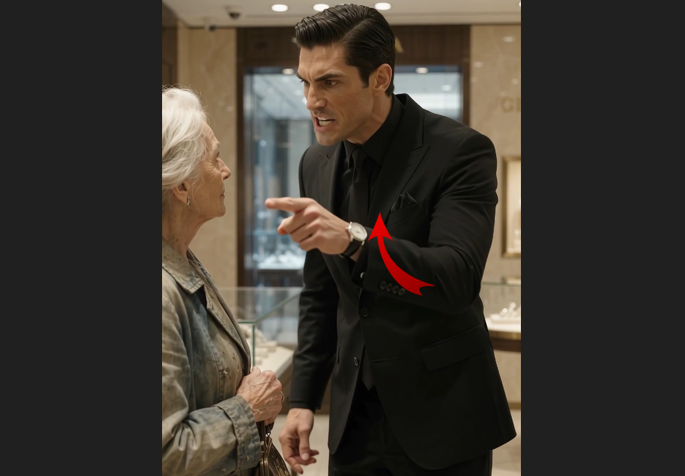
An elderly woman in a plain, worn coat entered a luxury boutique and asked to see a necklace. Before showing it, the salesman told her not to touch anything and suggested she shop somewhere she could afford. When she calmly repeated her request, he called for security instead of offering assistance.
The woman did not raise her voice. She told him he had no idea who he was speaking to, but he insisted he knew exactly what he saw. The exchange paused when another employee arrived, recognized the visitor, and addressed her as Madam President.
The salesman asked why his colleague used that title. The answer left him stunned: the woman was the founder and owner of the boutique. She had come in as a customer, yet the salesman had judged her coat before asking what she wanted to see.
Her message was direct: respect should never depend on a person’s identity. The scene’s turning point was not the owner’s title; it was the moment another employee chose to greet her properly and check that she was all right.
In a luxury shop, staff can protect merchandise while still welcoming visitors. A simple offer to show the necklace would have answered the woman’s request and avoided the confrontation. The story leaves viewers with a reminder that clothing cannot tell the whole story—and that courtesy belongs at the door, before anyone’s position or name is known.