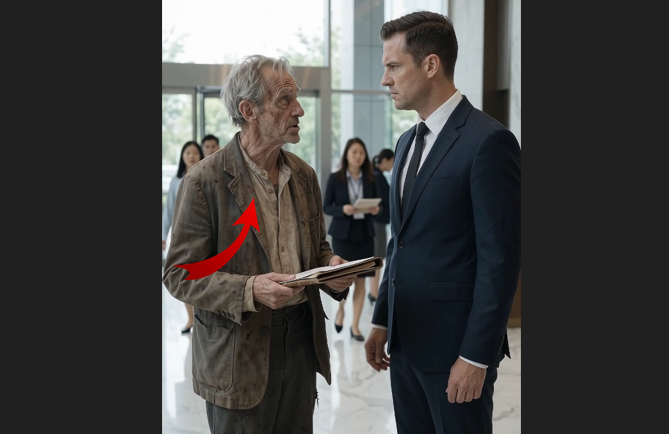
A visit to headquarters became an uncomfortable lesson in first impressions when a man arrived for a meeting. Carrying a worn folder, Mr. Harris approached the lobby entrance, but a suited employee stopped him before checking his appointment or reviewing his documents.
The employee insisted that the building was reserved for executives and said Mr. Harris did not belong. When the older visitor explained that he had a meeting upstairs, the employee dismissed his answer. Papers slipped from the folder and scattered across the floor as the exchange grew tense. Mr. Harris asked the employee to look at the documents, but the request was ignored.
The employee relied on his own assumptions. He was certain that he could identify who belonged in the building simply by looking at them. Mr. Harris remained focused on the practical issue: he had an appointment, and his papers could confirm it. The lobby encounter could have ended with a quick check, but the employee chose to argue.
A senior executive then arrived and immediately recognized Mr. Harris. She greeted him by name, apologized for the delay, and bent down to help gather the documents. She explained that the board was waiting for him and that he was the company’s founder.
The revelation changed the employee’s expression, but the executive made clear that the problem was not simply that he had failed to recognize an important person. She told him to hand over his access badge and leave, ending his employment in the scene. Her response underscored the seriousness of dismissing a visitor without first checking the facts.
Mr. Harris had already explained why he was there. His position as founder confirmed the appointment, but courtesy should not have depended on that title. Any visitor with a scheduled meeting deserves to be heard and directed through the proper process, regardless of clothing, age, or job status.
The story shows how small workplace choices can shape a company’s culture. A receptionist or employee can maintain building security while speaking respectfully, asking for a name, and checking the appointment list. These steps protect the organization and help prevent misunderstandings from becoming public confrontations.
The executive’s gesture of helping pick up the papers contrasted with the earlier treatment. She listened, recognized the need and responded with assistance. Her decision also reinforced that company standards apply in the lobby, where a first encounter can influence how visitors view the entire organization.
At the close, Mr. Harris reflects on respect that is withheld and later sought. His words invite viewers to consider how people treat someone they believe has little influence. A respectful response should not require knowing someone’s title, résumé, or place in a company.
This scene leaves a takeaway: check the facts before making a judgment. A worn folder or an unpolished appearance cannot explain why someone has come to a building. Listening first, reviewing the documents, and offering simple courtesy could have transformed the encounter into a meeting. Courtesy should come first.